Gestalt principles
When people perceive the world around them, they see faces, trees, sky, and the sun. They don’t see a a 3-dimensional array of points. In 1923, Max Wertheimer published his Gestalt laws of perceptual organization, which is an attempt to describe the principles by which people see structure beyond points, lines, and shapes. Since then, Gestalt principles of grouping have been expanded and formalized.
A lot has been written about Gestalt. But somehow, if you’re like me, you may have missed it all — and the topic is so cool that this post now exists. You can read more about Gestalt directly from Max Wertheimer, Wikipedia, Figma, Toptal, and Smashing Magazine.
Principles
The internet appears to disagree on whether there is a definitive, final, and complete list of Gestalt principles. In fact, each of the links above include overlapping but non-identical lists of Gestalt principles. Below are a few principles that are commonly cited.
-
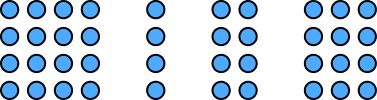
Law of proximity: objects that are closer together appear as groups to us.
-
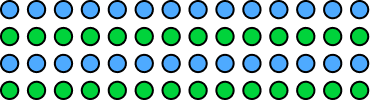
Law of similarity: objects that are similar to each other (e.g., color, shade, shape) will appear as groups to us.
-
Law of closure: we tend to see objects as whole, even when pieces are missing; our minds fill in the gaps.

-
Law of symmetry: we are more likely to group together objects that participate in symmetry. For instance, in the below picture, we tend to see three sets of matching brackets.

-
Law of common fate: we group together objects that appear to be on the same path.

-
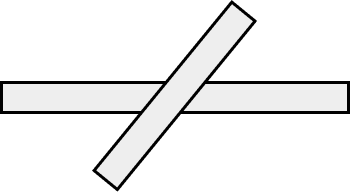
Law of continuity: when objects overlap, we tend to view them as two distinct objects — not as one object.
-
Law of past experience: if we have previously observed together, we are more likely to view them as a single group. For this reason, you’re likely to view the below image as a stoplight rather than three distinct circles.

Cool, right? If you’d like to check out more illustrations of Gestalt principles, I highly recommend this Twitter thread.